
PCOS Explained: Symptoms, Causes, and
What the New “PMOS” Name Means for
Your Diagnosis
PCOS symptoms can affect much more than your menstrual cycle. If you’ve been told you have polycystic ovary syndrome (PCOS), or you suspect you might, you’ve probably noticed that the name doesn’t fully explain what’s happening in your body…
In May 2026, a global consensus of researchers, clinicians, and patients published a paper in The Lancet renaming
PCOS to polyendocrine metabolic ovarian syndrome (PMOS).
The process took over a decade and drew on
responses from more than 14,000 patients and health professionals worldwide. This article walks through what PCOS
actually is, why the name is changing, how it’s diagnosed, and what evidence-based management looks like — so you
can make sense of your symptoms and speak confidently with your own care team.
What Are PCOS Symptoms and What Is PCOS?
PCOS is one of the most common hormonal conditions affecting women of reproductive age, estimated to affect
roughly one in eight to one in ten women worldwide. Despite the name, it isn’t really a disease of the ovaries alone. At
its core, PCOS is a hormonal imbalance involving excess androgens (sometimes called hyperandrogenism), disrupted
ovulation, and — for many women — insulin resistance that affects how the body processes blood sugar.
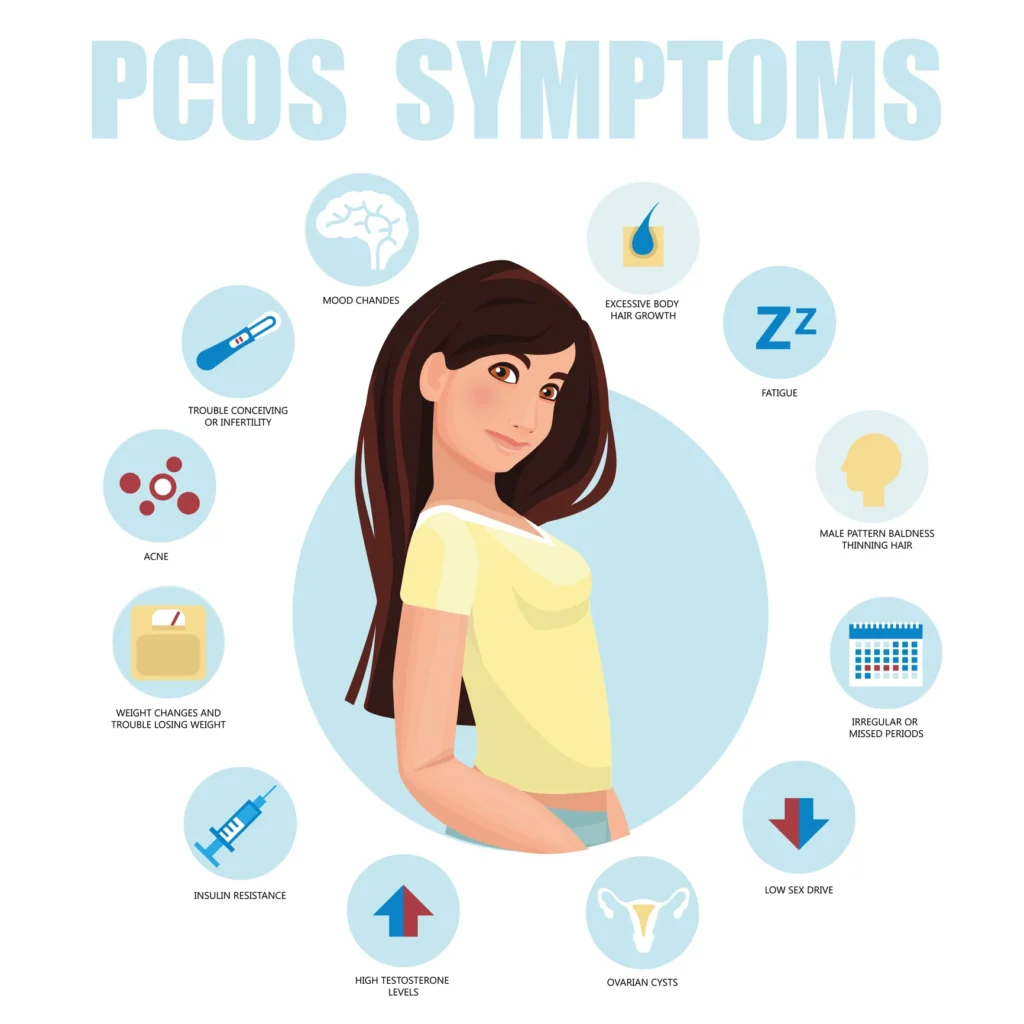
Because these three systems overlap and influence each other, PCOS can show up differently from one woman to the
next. Some notice irregular periods first. Others come in for acne, hair thinning, or difficulty losing weight. Some are
diagnosed only after struggling to conceive.
Why PCOS Is Being Renamed PMOS
The new name, polyendocrine metabolic ovarian syndrome, was chosen specifically to fix the confusion the old name
caused. Each part of PMOS is deliberate:
Polyendocrine — reflects that PCOS involves several hormone systems interacting, not just one.
Metabolic — acknowledges insulin resistance and long-term cardiovascular and diabetes risk as core features, not
side effects.
Ovarian — keeps the connection to ovulatory dysfunction and fertility, which remain central to the condition
Common PCOS Symptoms
Not every woman with PCOS has every symptom, and severity varies widely. The most frequently reported signs
include:
- Irregular, infrequent, or absent periods (a sign of ovulatory dysfunction)
- Excess facial or body hair growth (hirsutism)
- Persistent acne, especially along the jawline
- Thinning hair on the scalp
- Weight gain or difficulty losing weight, often centered around the abdomen
- Skin darkening in body folds, a marker of insulin resistance
- Difficulty conceiving
- Mood changes, including higher rates of anxiety and depression
What Causes PCOS symptoms?
There’s no single cause of PCOS. Instead, most researchers describe it as a condition that emerges from a mix of
genetics, insulin signaling problems, and hormonal feedback loops that reinforce one another. Elevated insulin levels
can push the ovaries to produce more androgens, and higher androgens can, in turn, worsen insulin resistance — a
cycle that helps explain why symptoms tend to compound over time rather than appearing all at once. Family history
plays a meaningful role too; having a mother or sister with PCOS raises your own likelihood of developing it.
Diagnosing PCOS Symptoms
There’s no single blood test that confirms PCOS. Most clinicians rely on the Rotterdam criteria, which calls for at least
two of the following three findings, after other conditions have been ruled out:
- Irregular or absent ovulation
- Clinical or lab-confirmed signs of hyperandrogenism (such as excess hair growth or elevated androgen levels)
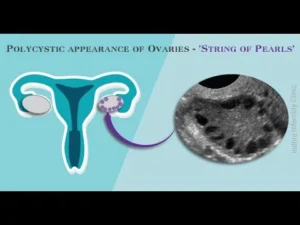
- Polycystic-appearing ovaries on ultrasound
This means it’s entirely possible to be diagnosed with PCOS without ever having ovarian cysts — one of the exact
points of confusion the PMOS renaming is meant to resolve. A thorough workup typically includes a menstrual history,
blood work to check hormone and glucose levels, and sometimes a pelvic ultrasound
Managing PCOS Symptoms Effectively
PCOS management is not one-size-fits-all, and treatment is usually built around your specific goals, whether that’s
regulating your cycle, managing symptoms like acne or hair growth, improving metabolic health, or supporting fertility
Nutrition and Lifestyle
Diet and movement remain the foundation of care for most women with PCOS, largely because of their effect on
insulin sensitivity. A balanced eating pattern with adequate protein and fiber, regular moderate exercise, and consistent
sleep can meaningfully improve menstrual regularity and metabolic markers over time. Even modest, sustainable
weight loss — around 5–10% of body weight — has been shown to improve ovulation in some women.
Medications
Depending on your goals, a physician may recommend hormonal birth control to regulate cycles and reduce androgenrelated symptoms, metformin to improve insulin sensitivity, or ovulation-inducing medications for women trying to
conceive. Anti-androgen medications are sometimes used for persistent hair growth or acne.
Supplements
Inositol, particularly in the myo-inositol and d-chiro-inositol combination studied in clinical trials, has gained attention
for its role in supporting insulin sensitivity and ovulatory function. Vitamin D and omega-3 fatty acids are also
commonly discussed, though supplements should complement — not replace — a personalized treatment plan
discussed with your provider.
Frequently Asked Questions
Is PCOS the same thing as PMOS?
Yes. PMOS (polyendocrine metabolic ovarian syndrome) is the new name adopted in 2026 for the condition previously
called PCOS. The diagnostic criteria and treatment approach are unchanged — only the terminology is shifting,
gradually, across medical records and research.
Can I have PCOS symptoms without ovarian cysts?
Yes. Diagnosis under the Rotterdam criteria only requires two of three features, so many women with PCOS never have
cysts on their ovaries at all. This is one of the key reasons the condition is being renamed.
Does PCOS go away on its own?
PCOS is a chronic, long-term condition rather than something that resolves permanently. However, symptoms can
improve substantially — and for some women, become largely manageable — with consistent lifestyle changes,
medication, or a combination of both.
Can women with PCOS symptoms get pregnant?
Yes. PCOS is a leading cause of ovulatory infertility, but it’s also one of the most treatable. Many women conceive with
lifestyle changes alone, while others benefit from ovulation-inducing medication or fertility specialist support.
What’s the difference between PCOS symptoms and endometriosis?
Both are common gynecological conditions that can cause irregular cycles and fertility challenges, but they’re distinct.
PCOS is primarily a hormonal and metabolic condition affecting ovulation, while endometriosis involves tissue similar
to the uterine lining growing outside the uterus, often causing pelvic pain. It’s possible, though less common, to have
both.
Can PCOS symptoms get worse with age?
Without proper management, PCOS symptoms can become more noticeable over time. Maintaining a healthy lifestyle and following your doctor’s treatment plan can help reduce symptoms and lower long-term health risks.
Is PMOS replacing the term PCOS everywhere?
PMOS is the updated name introduced in 2026 to better reflect the condition’s hormonal and metabolic nature. However, many healthcare providers and medical resources still use the term PCOS during the transition period.
Conclusion
Understanding PCOS symptoms is the first step toward early diagnosis and effective treatment. Although the condition is now being referred to as polyendocrine metabolic ovarian syndrome (PMOS), the underlying diagnosis and treatment principles remain the same. If you’re experiencing irregular periods, acne, excess hair growth, or fertility concerns, consult a qualified healthcare professional for evaluation. Early management can improve hormonal balance, metabolic health, and long-term well-being.Read more about women’s health in this site.